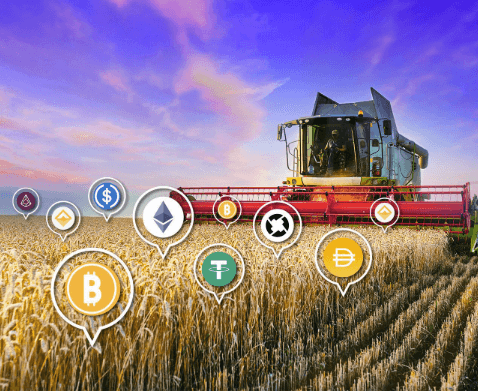
Yield farming is a data-driven strategy that channels crypto assets into liquidity pools and protocols to capture fees and incentives. It hinges on interoperable tokens, dynamic pools, and emission signals, with rewards that shift as positions rotate. The approach demands discipline: assess impermanent loss, emission drift, and liquidity risk before committing capital. Diversification and monitoring are essential, along with clear exit criteria. The stakes stay high if one ignores evolving incentives and the fine print that ties rewards to ongoing activity.
What Yield Farming Is and Why It Matters
Yield farming is a decentralized finance strategy that channels crypto assets into liquidity pools or protocols to earn rewards, typically in the form of more tokens. It measures risk through exposure, volatility, and smart contract integrity. Yielding misalignment and governance drift can erode returns, prompting caution. Data suggests liquidity dependence, capital risk, and evolving incentive structures constrain freedom with measurable trade-offs.
How It Works: Tokens, Pools, and Incentives
How does yield farming actually function in practice? The mechanism rests on interoperable tokens, liquidity pools, and performance signals. Yield tokens represent position value, while pool incentives align participant rewards with protocol throughput. Participants deploy capital, earn from trading fees and incentive emissions, and face changing yield as tokens rotate and pools reweight. Transparency varies; data-driven assessment remains essential, bias avoided.
Risks and Safeguards: Impermanent Loss to Emission Drift
In assessing yield farming dynamics, attention shifts from mechanism to risk, specifically how impermanent loss and emission drift can erode expected returns. This analysis emphasizes risks and safeguards, presenting data-driven cautions rather than promises. Impermanent loss remains a measurable constraint; emission drift underscores shifting token values. Safeguards include diversification, monitoring, and strategy review to preserve capital while preserving freedom to explore opportunities.
See also: The Role of Cloud in Data-Driven Businesses
How to Get Started: Step-by-Step, Budgeting, and Strategy Tips
Getting started with yield farming requires a disciplined, data-driven approach: practitioners should map a concrete plan with budget limits, risk controls, and measurable milestones before deploying capital.
The approach emphasizes risk-aware step-by-step execution, careful yield diversification to balance exposure, and disciplined liquidity selection to avoid overconcentration.
Data-driven monitoring enables timely adjustments, preserving freedom while preserving capital, with clear exit criteria.
Conclusion
Yield farming, when scaled to extremes, can vault capital into a whirlwind of profits and peril. The data-driven lens shows dazzling APYs, but impermanent loss and drift can erode gains faster than a liquidity pulse. A cautious strategist would stress disciplined budgeting, diversified pools, and rigorous exit criteria rather than heroic bets. In this high-stakes arena, risk parity—position sizing, continuous monitoring, and transparent metrics—becomes the only sustainable shield against spectacular, yet avoidable, financial cliff-dive.